Sacramento County CA offers residents and businesses a centralized hub for everything from court filings to tax payments, making everyday tasks faster and more transparent. The Sacramento County government oversees a wide array of services, including the Sacramento County courthouse for civil and criminal matters, the Sacramento County sheriff’s office that manages law enforcement and the Sacramento County jail inmate search, and the Sacramento County tax collector who handles property tax rates and business licensing fees. Citizens can instantly view Sacramento County public records, such as probate records, marriage licenses, and water quality reports, through secure online portals. The county’s GIS maps provide detailed parcel information, while the Sacramento County environmental services monitor air and water standards. Whether you need to check Sacramento County election results, locate a Sacramento County DMV location, or explore Sacramento County schools district performance, the integrated digital system delivers accurate data with just a few clicks, helping you stay informed and compliant.
It also supports community wellbeing through its extensive network of services. The Sacramento County parks and recreation department maintains green spaces and senior services, while the Sacramento County fire department stations and emergency services ensure rapid response to crises. Transportation options are streamlined via Sacramento County public transportation routes, and road maintenance updates keep commuters safe. Economic development initiatives attract new businesses, and the Sacramento County economic development office tracks demographic statistics and growth trends. For property owners, the Sacramento County property tax rates are clearly listed, and the Sacramento County probate court handles estate matters efficiently. Health concerns are addressed by the Sacramento County health department, which releases regular health advisories and monitors public health metrics. Together, these resources create a resilient, well‑served county that meets the needs of its diverse population.
How to Search Sacramento County CA
You can search records through official county websites that give you direct access to public files. The county runs several secure databases where you can look up inmates, court cases, property details, and marriage records without paying a fee. Each department controls its own portal, so knowing which office holds the record you need saves time. The main county website links you to every search tool, from the assessor to the sheriff’s office.
Most searches ask for a name, case number, or parcel number. The system then displays the matching file with dates, status, and document images when available. You can print or save the results for your own use. This hub gives you a clear path to every public record kept by agencies.
Official Search Portal: https://www.saccounty.gov/Pages/default.aspx
Steps to Search
- Visit the homepage at saccounty.gov and click on the “Government” or “Residents” tab to find a list of departments.
- Pick the department that holds the record you want, such as the Sheriff’s Office for inmate data or the Assessor for property files.
- Enter the required details, which usually include a full name, date of birth, case number, or parcel number, into the search field.
- Review the results list, select the correct entry, and open the full record to see charges, booking dates, property values, or court dates.
- Download, print, or save the PDF record for your files, or contact the office directly if you need a certified copy.
Inmate Search & Jail Records
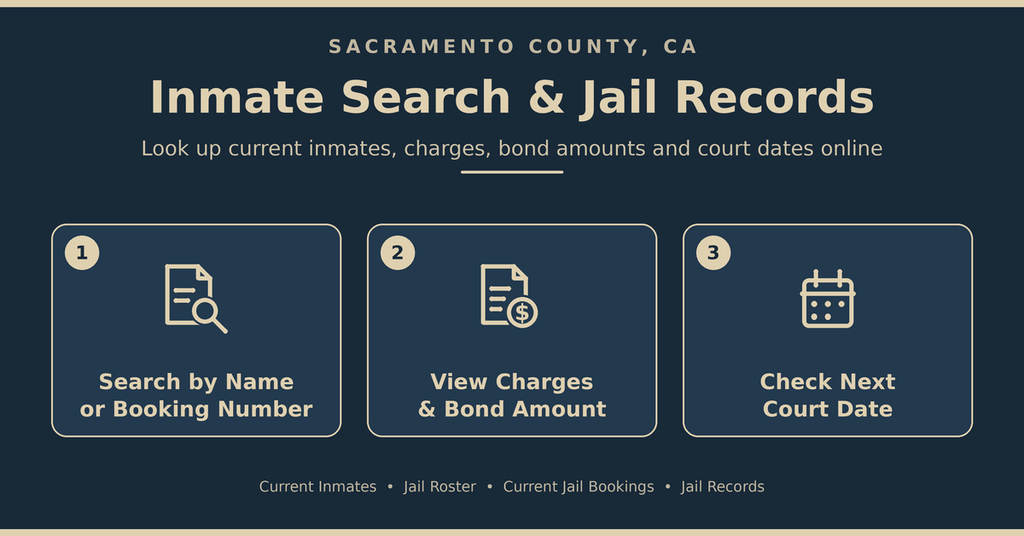
The Sacramento County sheriff’s office runs the main jail and keeps an online roster of every person currently held. You can look up an inmate by name or booking number and see their charges, bond amount, and next court date. The system updates the roster several times each day, giving you a current snapshot of the jail population. This tool helps families, attorneys, and bail agents check on a person’s status without calling the facility.
Inmate Search
You start an inmate search by entering the person’s last name into the Sheriff’s Office online tool. The system shows their booking photo, age, and the date they entered custody. You can also see the housing location and any scheduled release date. If you cannot find the person online, you can call the jail records desk during business hours for help.
Inmate Search by Name
Searching by name returns every person booked under that spelling, including common aliases listed in the arrest report. The results show middle names and birth years so you can pick the right person. If the name is common, adding a date of birth narrows the list quickly. The search covers both current inmates and people released in the past 30 days.
Current Inmates
The current inmate list shows everyone held in the Rio Cosumnes Correctional Center and the Main Jail as of the last update. You can see each person’s booking date, housing unit, and visitation status. The page also lists any medical or custody holds placed on the inmate. This list changes hourly as new bookings arrive and released inmates leave the system.
Current Jail Bookings
Current jail bookings show the people arrested and processed in the last 24 to 48 hours. Each entry lists the arrest time, arresting agency, and listed charges. The data comes straight from the intake desk at the jail. This view helps you confirm a recent arrest that has not yet moved into the full inmate roster.
Jail Roster
The full jail roster combines current inmates and recent bookings into one searchable table. You can sort by booking date, housing location, or charge type. The roster is the most complete public list of jail activity. Law firms and bail companies rely on this tool to track clients.
Jail Records
Jail records cover the full booking history of a person held in Sacramento County facilities. Each record shows the booking number, arrest date, charges, and final release date. The Sheriff’s Office keeps these records for several years, even after release. You can request older records through a public records request form.
Mugshots and Booking Photos
Booking photos appear next to each inmate entry on the sheriff’s website. The photos are taken at intake and updated when an inmate’s appearance changes. You can view the photo as part of the public record, but the sheriff removes photos after the inmate is released for a set period. The photos help confirm identity when you already have a name.
Recent Bookings
Recent bookings display the last 72 hours of new arrests processed by the Sacramento County jail. The list refreshes every few hours and shows arrest times, charges, and arresting officer details. This page is useful when you want to know if a family member was arrested overnight. You can click any entry to see the full booking report.
Booking Reports
A booking report gives a full account of one arrest, including the time of arrest, location, charges, and property collected from the inmate. The report also lists any injuries noted at intake and the arresting officer’s name. You can view the report online or request a printed copy. Booking reports form the base document for all jail records.
Booking Releases
The booking releases list shows every person released from custody in the past several days. Each entry lists the release reason, such as bail posted, sentence served, or transfer to another agency. The page helps you confirm a release without calling the jail. Released inmates still appear in the public records system for a short time.
Released Inmates
Released inmates stay visible in the public search for up to 30 days after their release date. This window lets you confirm release details and print proof of release if needed. After 30 days, the record moves to the historical archive. You can still request archived records through the sheriff’s records unit.
Inmate Population
The inmate population page shows the current headcount at every Sacramento County jail facility. The chart updates daily and breaks the population down by gender, charge type, and housing status. Public safety groups and reporters use this data to track jail trends. You can view the page without logging in or paying a fee.
Arrests & Warrants
It keeps arrest and warrant data in public databases run by the sheriff and local police departments. You can search active warrants, recent arrests, and criminal history records using a name or case number. These tools help you check if a warrant is open or review a person’s arrest background. The records also show whether charges are still pending or dropped.
Arrest Records
An arrest record lists the date, location, and reason for an arrest made in Sacramento County. The record includes the arresting agency and any charges filed. You can search these records through the sheriff’s online portal or request older files by mail. Each record shows the final court outcome when available.
Recent Arrests
Recent arrests appear in the sheriff’s daily blotter and online arrest log. The log lists the arrest time, city, and charge for each incident. Local media often pull data from this same source for news reports. You can filter the list by city or charge type to narrow your search.
Active Warrant Search
The active warrant search lets you look up outstanding arrest warrants issued by Sacramento County courts. You enter a name and date of birth to see if a warrant is open. The results show the warrant number, charge, and bond amount. If you find a warrant, contact a lawyer before turning yourself in to handle the case properly.
Wanted Persons
The wanted persons page lists people with active felony warrants who have not yet been arrested. Each entry shows a photo, last known location, and the charges behind the warrant. Crime stoppers often share these notices to ask for public tips. You can report a tip anonymously through the listed phone number or online form.
Bench Warrants
Bench warrants are issued when a person fails to appear in court or follow a judge order. The court clerk adds these warrants to the sheriff’s public database. You can search bench warrants by name through the court case portal. Clearing a bench warrant usually requires a court appearance or payment of a fine.
Warrant Records
Warrant records show the full history of warrants issued for one person, including cleared and outstanding warrants. The record lists the issuing judge, the case number, and the date served or recalled. You can request a copy of the warrant document for court or legal use. Older warrant records move to the county archive after several years.
Criminal History
Criminal history records show every arrest and conviction for a person within California. You can request your own criminal history through the California Department of Justice or the local sheriff. The record covers Sacramento County arrests and any out-of-county cases. This file is often needed for job applications, immigration cases, or firearm permits.
Background Checks
Background checks pull data from criminal history, court records, and other public sources. Employers, landlords, and volunteer groups often run these checks before hiring. You can run a basic check on yourself through the sheriff’s office or order a full check from an approved vendor. The cost and turnaround time depend on the depth of the search.
Criminal Records
Criminal records include the arrest report, charging documents, court filings, and final judgment for a criminal case. You can view most records online through the Superior Court portal. Sealed or juvenile records do not appear in the public search. You can ask the court to seal eligible records after a waiting period.
Felony Records
Felony records cover serious charges handled in the Superior Court. Each record shows the indictment, plea, and sentence details. You can search these records by defendant name or case number. Felony convictions can affect voting rights, job prospects, and housing applications, so accuracy matters.
DUI Records
DUI records list arrests and convictions for driving under the influence in Sacramento County. The record shows blood alcohol level, court outcome, and any license suspension. You can find these records through the court portal or the DMV. Repeat DUIs carry heavier penalties, so the full history is important.
Court Records
The Sacramento County courthouse runs an online portal where you can search civil, criminal, family, and probate cases. Each case file shows the parties, charges, hearing dates, and filed documents. You can search by name, case number, or attorney bar number. The system gives you a full view of court activity without visiting the building.
Court Case Search
You start a court case search by entering a name or case number on the Superior Court website. The results show the case type, filing date, and current status. You can click any case to see the full docket and document list. This tool is the fastest way to check a case without calling the clerk’s office.
Case Lookup by Name or Number
Case lookup works for both individuals and businesses involved in court actions. You can enter a partial name and the system returns close matches. Adding a date of birth or business ID number gives a more exact result. The lookup covers active and closed cases back to the early 2000s.
Case Information and Status
Case information shows the current stage of a court action, such as pending, disposed, or on appeal. The status updates each time the clerk files a new document. You can set up email alerts for case updates through the court portal. The status also lists the next hearing date and assigned judge.
Court Calendar and Hearings
The court calendar lists all scheduled hearings for a given day, courtroom, or judge. You can view the calendar by department to see the daily docket. This tool helps attorneys and the public plan their courthouse visits. Calendars are usually posted a few days in advance.
Court Docket
A court docket lists every document filed in a case in order. The docket shows filing dates, document types, and the filing party. You can open each document as a PDF if the court has digitized it. Older paper dockets can be viewed at the clerk’s office by appointment.
Civil Court Records
Civil court records cover disputes between people or businesses, such as contract issues, property conflicts, and personal injury claims. The record shows the complaint, answer, motions, and final judgment. You can search these files by plaintiff or defendant name. Many civil records are public, but some sensitive files are sealed by the judge.
Criminal Court Records
Criminal court records follow a case from arraignment through sentencing. The record shows each charge, plea, motion, and court order. You can find these records through the public case portal. The portal also lists the sentence, fines, and probation terms when the case closes.
Family Court Records
Family court records cover divorce, custody, child support, and domestic violence cases. The records list petitions, responses, and court orders. Some family court files are confidential and require a court order to view. The clerk’s office can tell you which parts of a file are open to the public.
Probate Court Records
Probate court records handle wills, estates, guardianships, and conservatorships. The record shows the petition, inventory of assets, and final distribution order. You can search these files by decedent name or case number. The Sacramento County probate court also handles small estate affidavits and trust filings.
Traffic Court Records
Traffic court records cover infractions, misdemeanors, and felony traffic cases. The record shows the citation, plea, fine amount, and any traffic school orders. You can pay fines or contest tickets through the court’s online system. Most traffic records stay on your DMV record for three to seven years.
Vital Records
They keeps birth, death, marriage, and divorce records through the Clerk-Recorder’s office. You can order certified copies of these records for legal or personal use. Older records may be available through the California Department of Public Health. The clerk also offers same-day service for in-person requests.
Birth Records
Birth records show the full name, date of birth, place of birth, and parents’ names. You can request a certified copy through the Clerk-Recorder or the state vital records office. The county keeps records for births that took place in Sacramento County. You must show ID and proof of relationship to get a certified copy.
Death Records
Death records list the decedent’s name, date of death, cause of death, and place of burial. The county records deaths that happen within Sacramento County borders. You can order copies for estate settlement, insurance, and genealogy work. State law limits who can request a certified death certificate.
Death Index
The death index is a searchable list of every death recorded in Sacramento County. The index shows the name, year of death, and certificate number. You can use the index to find the right record before ordering a full copy. The index goes back many decades and is free to search.
Marriage Records
Marriage records show the names of both spouses, the date of the ceremony, and the officiant. The Sacramento County clerk issues marriage licenses and records the returned certificates. You can order copies for name changes, insurance, or genealogy. Both parties must show ID to get a certified copy.
Marriage License
You can apply for a marriage license at the Clerk-Recorder’s office by appointment or online. The license is valid for 90 days from the date of issue. You and your partner must appear together with valid photo ID. The county also offers confidential licenses for couples under 18 with parental consent.
Divorce Records
Divorce records cover the petition, settlement, and final judgment of a marriage dissolution. The Superior Court files these records, and the Clerk-Recorder indexes them. You can request a copy of the judgment for legal or personal use. The full case file is also available through the court portal.
Divorce Decree
The divorce decree is the final court order that ends a marriage. It lists property division, custody orders, and support payments. You can order a certified copy from the Clerk-Recorder or the court. Most decrees are public, but sensitive details may be redacted.
Dissolution of Marriage Records
Dissolution of marriage is the legal term used in California for divorce. The records follow the same process as divorce records and are filed in Superior Court. You can search these records by case number or spouse name. The records also cover legal separation, which is a different filing type.
Genealogy Records
Genealogy records include birth, death, marriage and census data used for family research. The library and archives hold older records not available online. You can visit the California State Archives in Sacramento for statewide collections. The Clerk-Recorder can also help you find older vital records.
Obituaries
Obituaries are short death notices published in local newspapers and online. The Sacramento Bee and other papers keep archives that go back many years. You can search these archives for free at the public library. The obituary often lists family members, funeral details, and memorial donations.
Property Records
The Sacramento County assessor and recorder keep property records for every parcel in the county. You can search by address, owner name, or parcel number. The records show ownership history, assessed value, deed transfers, and tax liens. These tools help buyers, sellers, and researchers check property details.
Property Search
The property search tool on the assessor website lets you look up any parcel in Sacramento County. You can search by parcel number, street address, or owner name. The result page shows the assessed value, lot size, year built, and sale history. You can also view a photo of the property and a sketch of the parcel.
Property Search by Address
Searching by address is the easiest way to find a specific home or business. You enter the house number and street name, and the system pulls up the matching parcel. The page shows the owner’s name, mailing address, and tax bill status. You can also see the property’s zoning and land use code.
Property Search by Owner
Searching by owner name shows every parcel linked to a person or business. The list shows each property’s address, parcel number, and assessed value. This tool is useful for investors and researchers who track ownership across the county. You can export the list to a spreadsheet for further work.
Property Records
Property records include deeds, mortgages, liens, and easements filed with the recorder. You can view scanned copies of recorded documents through the recorder’s online system. The records go back many decades, and older images may take longer to load. You can order certified copies for a small fee.
Property Ownership Records
Property ownership records show the chain of title for a parcel, including every transfer since the county was formed. The record lists the grantor, grantee, and date of each transfer. You can use this history to check for liens, easements, or boundary issues. The recorder indexes all documents by name and parcel number.
Property Owner Lookup
The property owner lookup is part of the assessor search and shows the current owner’s name and mailing address. The lookup does not list phone numbers or personal contact details for privacy reasons. You can find contact details through public directories if needed. The owner data updates after each recorded transfer.
Address Lookup
Address lookup helps you confirm the parcel number, zoning, and tax district for a street address. The tool is useful for builders, title companies, and residents checking neighborhood data. The address search also shows the assigned school district and voting precinct. You can link the address to the GIS map for a visual view.
Deed Records
Deed records show the legal transfer of property between owners. Each deed lists the parties, legal description, and consideration paid. The recorder indexes deeds by grantor and grantee name. You can view images of the original deed online and order certified copies for closing or legal use.
Property Tax Records
Property tax records show the current year tax bill, payment history, and any penalties. The tax collector updates the records after each payment. You can pay your bill online or set up an installment plan. The tax rate is set each year by the Board of Supervisors and varies by area.
Tax Liens
Tax liens are claims placed on a property when the owner falls behind on taxes. The county records these liens in the official records system. You can search for liens by parcel number or owner name. Liens must be paid before the property can be sold or refinanced.
Parcel Information
Parcel information shows the legal lot size, dimensions, and zoning code for a property. The data comes from the assessor’s maps and recorded subdivisions. You can use the parcel number to pull up the GIS map view. The assessor updates parcel data after each lot line adjustment or merger.
Police & Incident Records
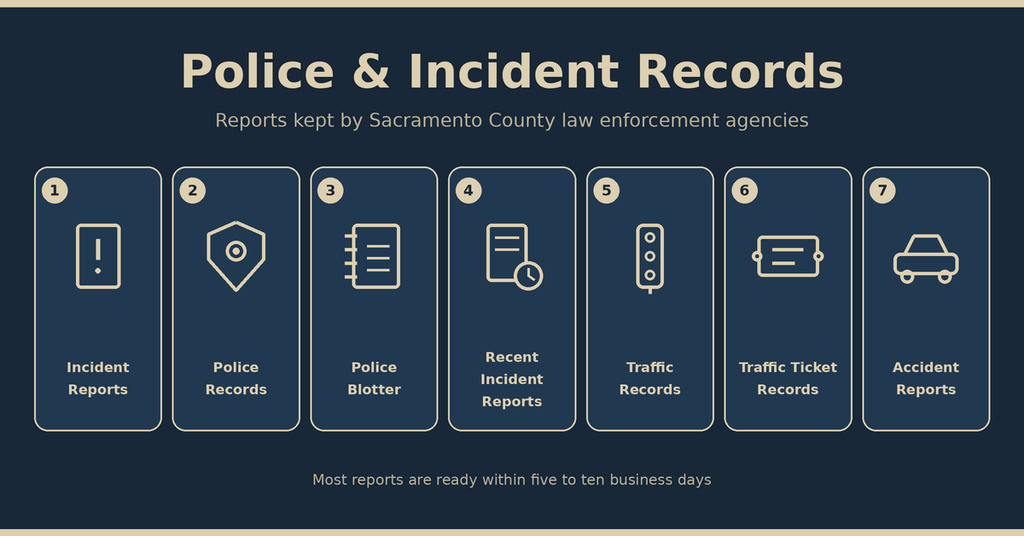
Sacramento County law enforcement agencies keep incident reports, traffic records, and accident reports. You can request copies through the sheriff’s office or city police departments. The reports are public, but some details may be redacted for privacy. Most reports are ready within five to ten business days.
Incident Reports
An incident report describes a call for service, the officers’ response, and any action taken. The report lists the date, location, and type of incident. You can request a copy for insurance, court, or personal records. Reports for ongoing investigations may be delayed or partially redacted.
Police Records
Police records include incident reports, arrest logs, and officer activity logs. You can request these records through the agency’s records unit or online portal. The records are public under the California Public Records Act. Some records are exempt for safety or privacy reasons.
Police Blotter
The police blotter is a daily list of notable incidents handled by the sheriff and city police. The blotter shows the type of call, neighborhood, and time of day. Local news outlets often republish this list. The blotter is a good way to track crime patterns in a specific area.
Recent Incident Reports
Recent incident reports are posted to the sheriff’s website within a few days of the call. The list includes the case number, location, and incident type. You can click any entry to see a summary of the event. Full reports can be requested once the case is closed.
Traffic Records
Traffic records cover citations, accidents, and traffic stops handled by county and city officers. The records show the violation, location, and final outcome. You can request your own records through the issuing agency. Some traffic data is also posted in the annual traffic report.
Traffic Ticket Records
Traffic ticket records show the citation number, violation code, and fine amount. The court system uses these records to track case status. You can pay tickets, request traffic school, or contest the citation through the court portal. Failure to respond can lead to a hold on your DMV record.
Accident Reports
Accident reports describe a traffic crash, the vehicles involved, and any injuries reported. The reporting officer files the report with the DMV and the local agency. You can request a copy through the police or sheriff’s records unit. Reports are usually ready within seven days of the crash.
People & Phone Search
You can look up people through public directories, court records, and property files. Phone searches use reverse lookup tools that match a number to a name or business. These tools are useful for skipping unwanted calls, finding old friends, or verifying a contact. Many searches are free, but some detailed reports carry a fee.
People Search
People search tools pull data from public records like voter registration, property ownership, and court filings. You enter a name and city to see possible matches. The results show age, address history, and known relatives. These tools work best when you know the person’s full name and last city of residence.
Person Lookup
A person lookup can confirm a current address or phone number linked to a name. You can use the county voter file or property records to confirm residency. The data is current as of the last update from each source. The lookup does not include private details like Social Security numbers.
Phone Lookup
Phone lookup tools match a phone number to the registered owner or business name. Free tools use public listings, while paid tools may include cell phone data. The search is useful for identifying unknown callers. Always respect privacy laws when using phone lookup data.
Reverse Phone Lookup
Reverse phone lookup works by entering a number to find the owner. The tool shows the name, address, and carrier when available. You can use this to check a missed call or confirm a contact. Many reverse lookup sites offer a basic search for free.
Phone Directory
The county phone directory lists contact numbers for every department and elected office. You can find the directory on the saccounty.gov website under “Contact Us.” The directory also lists email addresses and office hours. This is the best way to reach the right office the first time.
Residents Directory
The residents directory is a public listing of residents used for jury duty, voting, and county outreach. The directory is updated each year by the elections office. You can verify your own record or ask the office to correct wrong details.
White Pages
White pages list local residents by name and address. The county library keeps printed white pages for Sacramento, and online versions update more often. You can use the white pages to find a neighbor or old classmate. Listing is opt-in for some categories.
Public Contact Records
Public contact records include business filings, professional licenses, and voter registration data. These records are open under California law. You can search them through the Secretary of State, the county clerk, or professional licensing boards. The data helps you confirm a business is legitimate.
Vehicle Records
Vehicle records include license plate lookups, VIN checks, and traffic history. The DMV holds the master vehicle file, while the county runs the local plate search tool. You can use these records to check a car’s history before buying or to look up a plate seen in an incident. Most basic lookups are free, but full reports may cost a fee.
License Plate Lookup
A license plate lookup shows the registered owner and vehicle make and model. The local police and sheriff can run a plate for official business. Private citizens can use third-party services for a fee. The results do not include the owner’s personal phone or address.
VIN Lookup
A VIN lookup shows the vehicle’s year, make, model, and factory options. The DMV and the National Highway Traffic Safety Administration offer free VIN tools. The lookup can flag open recalls or theft reports. Always run a VIN check before buying a used car.
Vehicle Records
Vehicle records show registration status, title history, and any salvage or flood titles. You can order a full record through the DMV or an approved vendor. The record is useful when checking a used car or verifying a company’s fleet. The DMV charges a small fee for the full report.
Traffic Records
Traffic records show points on your license, recent citations, and accident history. The DMV keeps the master file, and the Superior Court handles ticket cases. You can request a copy of your driving record through the DMV website. The record is often required for insurance or job applications.
Business Records
Business records include business filings, assumed name certificates, and UCC liens. The Clerk-Recorder files most of these documents, and the Secretary of State handles corporations. You can search these records to confirm a business is active, check its owners, or review its filings.
Business Records
Business records cover formation papers, annual reports, and amendments filed by the company. The records are public and free to search online. You can order certified copies for legal or banking use. The Clerk-Recorder also handles liens and judgments against a business.
Business Search
You can search businesses by name, owner, or entity number through the Clerk-Recorder or Secretary of State. The search shows the entity type, status, and registered agent. This tool is useful for confirming a company is in good standing before signing a contract.
Business Lookup
A business lookup shows the company’s mailing address, officers, and any assumed names on file. The lookup pulls data from county and state filings. You can use this to check the owners of a small business or contractor. The data is updated after each new filing.
Assumed Name Records
Assumed name records, also called fictitious business name filings, let a business operate under a name other than its legal name. The Clerk-Recorder files these certificates and publishes them in a local paper. You can search these records to find the legal owner of a business name.
UCC Records
UCC records show financing statements filed against a business’s assets. Lenders file these records to protect their interest in equipment, inventory, or receivables. The records are public and searchable by debtor name. You can order copies through the Clerk-Recorder.
Business Filings
Business filings include articles of incorporation, partnership agreements, and trademark registrations. The county handles local filings, and the Secretary of State handles statewide ones. You can search these records to confirm a company’s legal status. Some filings are only available as scanned images.
Business Ownership Records
Business ownership records show the legal owners, partners, or corporate officers behind a company. The records come from formation papers and annual reports. You can search these records to confirm who runs a business. The data also shows the percentage of ownership in some filings.
Public Records
Records follows the California Public Records Act, which gives you the right to request most government files. You can file a request with any county department or use the online portal. The agency has 10 days to respond to your request. Some records are exempt for privacy, safety, or legal reasons.
Public Records Search
The public records search pulls files from county departments into one online index. You can search contracts, salaries, meeting minutes, and more. The search is free to use, but downloading large files may require a request. The index is updated weekly by the county clerk.
Online Records Search
The online records search is available 24 hours a day on the county website. You can search records from your home or office without an account. The search results show document images when available. You can save or print the results for your own files.
Open Records
Open records cover meeting agendas, contracts, and budgets posted by the county. These records are posted before each meeting and kept online for several years. You can use the records to track spending or policy decisions. The clerk’s office is the official custodian of these files.
Official Records
Official records include deeds, liens, judgments, and other documents recorded with the county. The recorder indexes these records by name and document type. You can view the records online and order certified copies. The official record is the legal copy used in court.
Public Information Requests
You can file a public information request for any record not posted online. The request must describe the records you want and your contact details. The county responds in writing within 10 days. If the request is denied, the agency must explain the legal reason.
Records by Department
Each county department manages its own set of public records. The main website links to every department’s portal. You can also call the department to ask about a specific record. The table below shows the main record holder for each topic.
County Government
The government runs through a Board of Supervisors and several elected offices. The Board sets policy, approves the budget, and oversees county departments. Elected officials include the sheriff, district attorney, assessor, and clerk-recorder. You can attend board meetings in person or watch them online.
County Auditor
The County Auditor reviews county spending, payroll, and financial reports. The office posts the annual financial report and audit findings online. The auditor also reviews contracts before payment. You can search past audits through the county website.
County Clerk
The County Clerk manages vital records, marriage licenses, and fictitious business names. The clerk also runs the county’s public records portal. You can visit the clerk’s office at 700 H Street, Sacramento, during business hours. The office also offers online services for most requests.
District Clerk
The District Clerk handles court filings for the Superior Court. The clerk’s office accepts new cases, files motions, and issues certified copies of judgments. The office is located in the Gordon D. Schaber Courthouse. You can file many documents online through the court’s portal.
Tax Office
The Tax Office, led by the Tax Collector, bills and collects property taxes. The office also handles business licenses and fee payments. You can pay your bill online or set up an installment plan. The Tax Office posts the annual property tax rate on its website each spring.
Sheriff’s Office
The Sacramento County Sheriff’s Office provides patrol, investigations, and jail services. The office runs the inmate search tool and crime tip line. You can contact the sheriff’s headquarters for non-emergency help. The office also issues concealed carry permits and civil process service.
Elections
The Sacramento County Elections Office runs voter registration, polling places, and election results. The office posts results on election night and certifies the count within 30 days. You can check your registration status or update your address online. The office also runs the Sacramento County voting precincts lookup tool.
County Departments
Sacramento County runs more than 30 departments that handle health, human services, roads, and parks. Each department has its own page on the county website. You can find the contact list and service menu on the main “Government” tab. Most departments accept online applications and payments.
Commissioners Court
The Board of Supervisors acts as the Commissioners Court for budget and policy matters. The Board meets every Tuesday at the County Administration Center. You can watch meetings live or read the minutes online. Public comment is open at the start of each meeting.
County Judge
California counties do not have a single county judge. Instead, the Superior Court judges handle cases in each branch. The presiding judge runs the court and assigns cases. You can find the judicial directory on the court’s website.
GIS & Maps
The Sacramento County GIS system gives you a digital map of every parcel, road, and district in the county. You can search by address, parcel number, or owner name. The map layers show zoning, flood zones, voting precincts, and school districts. The GIS tool is free to use on the county website.
GIS Map
The main GIS map is an interactive web map that runs in your browser. You can zoom to a neighborhood or print a custom map. The map pulls data from the assessor, recorder, and planning departments. You can also measure distance and area on the map.
Property Map
The property map shows parcel boundaries and ownership details. You can click any parcel to see the owner, assessed value, and land use. The map is updated weekly after new sales are recorded. You can export the map image for use in reports.
Parcel Map
The parcel map is the official map of every lot and block in the county. The map shows lot lines, dimensions, and easements. You can use the parcel map to check property boundaries before a fence or addition. The map is part of the assessor’s public records.
Precinct Map
The precinct map shows voting precincts and polling places for each election. You can enter your address to find your assigned precinct and polling place. The map updates after each redistricting cycle. The elections office also mails a precinct card to each voter.
Interactive Map
The interactive map adds layers for schools, parks, public transportation routes, and zoning. You can turn layers on and off to build a custom view. The map is useful for planning a move or a project. The map works on phones and tablets as well as desktop computers.
Property Boundary Map
The property boundary map shows the exact lines of each parcel over a satellite image. You can measure the lot and check for encroachments. The map data comes from recorded surveys and subdivision maps. You can order a more detailed boundary survey from a licensed surveyor if needed.
Geographic Information
Geographic information covers the county’s terrain, watersheds, and land use. The GIS portal offers downloads of elevation, soils, and floodplain data. Researchers and developers use this data for planning and analysis. The GIS team also runs open data portals with the same files.
Unclaimed Money & Property
They holds unclaimed funds from tax overpayments, uncashed checks, and abandoned safe deposit boxes. You can search the state controller’s database for unclaimed property linked to your name. The county also posts a list of unclaimed funds held by the tax collector. You can file a claim online for free.
Unclaimed Money Search
The state controller’s website lets you search unclaimed money for any person or business. The search covers bank accounts, insurance payouts, and stocks. You can file a claim once you confirm the match. The state notifies the holder before releasing the funds.
Unclaimed Property Search
The unclaimed property search covers physical items like safe deposit box contents and property left with the county. The county clerk and treasurer keep these records. You can search by name and last known address. The office releases the property after you prove your identity.
Unclaimed Funds
Unclaimed funds are cash amounts held by the county, such as overpaid taxes or unclaimed jury duty pay. The treasurer posts a list of these funds each year. You can file a claim form with proof of identity. The county pays approved claims within a few weeks.
How to Claim Unclaimed Property
You can claim unclaimed property in Sacramento County CA through a simple process that starts with a free online search. The table below outlines the steps and the office that handles each type of claim.
Contact Details
The list below gives you the main phone numbers, addresses, and websites for the most-used Sacramento County CA offices. You can call or visit during posted business hours. Most offices also offer online services for common requests.
- Office: 700 H Street, Sacramento, CA 95814
- Phone: 916-874-5831
Frequently Asked Questions
Find quick answers for common tasks in Sacramento County CA, from public records to court services and taxes.
How to find Sacramento County public records?
Start at the official county website, which links to each department’s portal. The assessor’s page offers property deeds, while the clerk‑recorder provides birth, death, and marriage files. For court filings, use the online docket at the Sacramento County courthouse portal. All databases are free and searchable by name, case number, or address. If a record is not online, contact the relevant office by phone or email to request a copy or schedule an in‑person visit.
Where is the Sacramento County courthouse located?
The main Sacramento County courthouse sits at 720 9th Street in downtown Sacramento. It houses civil, criminal, family, and probate divisions. Parking is available in nearby municipal lots, and the building is accessible by public transit routes that stop at the Capitol Corridor station. Security screening occurs at the main entrance, and visitors must check in at the clerk’s desk before entering courtrooms.
How can I search the Sacramento County jail inmate list?
Use the Sacramento County sheriff’s office online inmate search tool. Enter the inmate’s last name or booking number to view current custody status, charges, and projected release date. The site updates daily and includes mugshots and bond information. For detailed records or assistance, call the jail information line during business hours.
What are current Sacramento County property tax rates?
As of the latest fiscal year, the base property tax rate in Sacramento County is 1.1 percent of assessed value. Additional levies for schools, fire protection, and special districts may raise the total rate to about 1.3 percent. The county assessor’s office publishes exact rates and any voter‑approved bonds each year. Property owners can view their bill online or request a paper copy.
How do I get a marriage license in Sacramento County?
Visit the Sacramento County Clerk‑Recorder office at 915 Front Street. Bring valid photo ID, proof of residency if required, and the completed application form. The fee is paid at the window, and the license is issued immediately. Couples must return the signed license to the same office within 90 days for the marriage certificate.